By Claus Hetting, WiFi NOW CEO & Chairman
The race to commercialise Wi‑Fi 8 is accelerating: TP-Link has unveiled an expansive portfolio of new Wi‑Fi 8 products led by its Archer 8 Ultra router and Deco 8 Ultra mesh system. Preorders for the first (Archer 8 Ultra) product are scheduled to begin in selected markets on September 30, TP-Link says in a press release here. The announcement was largely expected as TP-Link had already indicated expected Wi-Fi 8 product availability this fall in statements made earlier this year.
At IFA 2026 in Berlin this week, TP-Link unveiled what the company calls the ‘world’s first complete Wi‑Fi 8 product lineup’. The portfolio includes conventional and mesh routers, a travel router, range extenders, and client adapters, with launches planned between September of this year and the second quarter of 2027. The release makes the TP-Link the first major and mainstream Wi-Fi router manufacturer to commercially release Wi-Fi 8 products (ASUS launched their first Wi-Fi 8 products last week).
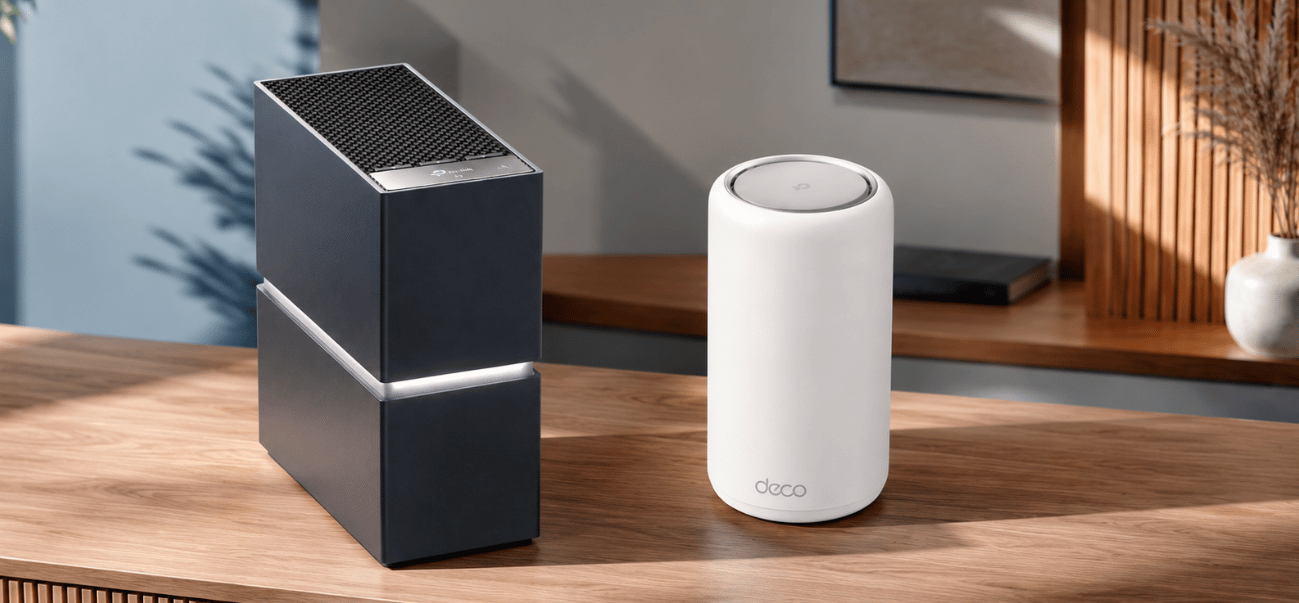
The first product to reach the market will be the tri-band Archer 8 Ultra BN19000, also known as the Archer BN800. TP-Link says the unit delivers aggregate wireless speeds of up to 19 Gbps, 10 Gbps wired connectivity, and includes 18 internal antennas. Regional preorders for the Archer 8 Ultra are scheduled to begin on September 30, when TP-Link will also present further product details during an online launch event. Pricing and precise regional availability have not yet been announced.
The second flagship product is the Deco 8 Ultra BN22000 mesh system, also known as the Deco BN85. TP-Link says the tri-band system delivers aggregate wireless speeds of up to 22 Gbps and includes 10 Gbps wired connectivity. According to the company, a three-unit Deco 8 Ultra system will cover up to 9,800 square feet – or approximately 910 square metres – and support more than 200 connected devices. The mesh system is scheduled for release during the first quarter of 2027.
Want to know more about Wi-Fi 8? For an in-depth analysis, don’t miss our comprehensive technical and business guide to the new standard in the WiFi NOW Resource Centre here.
TP-Link positions Wi‑Fi 8 as ‘the reliability generation’
Unsurprisingly, TP-Link is primarily positioning Wi‑Fi 8 as a technology for delivering more consistent connectivity and not simply a new peak-speed upgrade – which Wi-Fi 8 standard is not. Instead TP-Link has dubbed its collection of Wi‑Fi 8 reliability features the StabilityEngine.
The company says the technology is designed to improve performance at the edge of coverage, reduce the effects of interference, and manage congestion when many devices compete for airtime. The new platform incorporates several technologies being developed as part of IEEE 802.11bn including Enhanced Long Range and Distributed Resource Units, Non-Primary Channel Access, Unequal Modulation, and New modulation and coding options.
The features reflect the broader purpose of the IEEE 802.11bn standard – officially designated ‘Ultra High Reliability’. Wi‑Fi 8 is intended to improve predictability, coverage, latency, and performance in congested or interference-heavy environments. TP-Link says its Wi‑Fi 8 portfolio will use chipsets supplied by Broadcom, Qualcomm, and MediaTek, although it has not yet identified which platforms will power the individual products – which makes us wonder why they would mention it in the first place.
A roadmap extending into the second quarter of 2027
Following the Archer 8 Ultra, TP-Link currently expects to introduce the remainder of the portfolio according to the following schedule:
- Deco 8 mesh systems: First quarter of 2027
- Roam 8 travel router: Second quarter of 2027
- Wi‑Fi 8 range extenders: Second quarter of 2027
- Wi‑Fi 8 client adapters: Second quarter of 2027
The inclusion of adapters is notable because the practical value of early Wi‑Fi 8 infrastructure will depend on the availability of compatible client devices of – at the moment – none have been released. Meanwhile, Wi-Fi 8 features could be more impactful in the case of mesh. TP-Link has not yet released specifications for the adapters or identified which client interfaces and Wi‑Fi 8 capabilities they will support.
TP-Link is not the first vendor to announce Wi‑Fi 8 consumer products. On August 25, ASUS unveiled its ROG Rapture GT-BN98 gaming router and ZenWiFi BN12 mesh system. TP-Link’s “world’s first complete lineup” claim therefore appears to refer to the breadth of its planned portfolio rather than the first announcement of a Wi‑Fi 8 router or mesh product.
All these products are arriving well ahead of completion of the underlying standard (read more about Wi-Fi 8 schedules here). IEEE’s current project schedule identifies IEEE 802.11bn as being at Draft 2.0 and forecasts final publication in May 2028. Early products will therefore be based on draft versions of the specification, as was also the case during the early commercialisation of previous Wi‑Fi generations.
The most significant part of TP-Link’s announcement is arguably not the claimed aggregate speed of its two flagship products but rather the company’s decision to place Wi‑Fi 8 reliability features into a broad consumer portfolio – and to attach a firm preorder date to the first product. Pricing, regional availability, certification, chipset allocation, and the availability of compatible Wi‑Fi 8 clients are still open questions. TP-Link says it will reveal more when the Archer 8 Ultra launches online on September 30. Read more about TP-Link’s Wi-Fi 8 solutions here.
/Claus