By Claus Hetting, WiFi NOW CEO & Chairman
The next era of wireless innovation will increasingly be defined by how multiple wireless technologies work together to deliver new capabilities. Wi-Fi will remain at the centre of this evolution, complemented by Bluetooth LE, ultra-wideband (UWB), Wi-Fi HaLow, and other emerging wireless technologies. The transition presents substantial commercial opportunities but also significant engineering challenges. This is the vision behind the expanded WiFi NOW World Congress 2027.
For much of the past two decades, the wireless industry has been organised around individual technologies, each with its own ecosystem of silicon vendors, equipment manufacturers, standards organisations, and application developers. Much of the debate has centred on which wireless technology is best suited to a particular application.
We believe the next era of wireless innovation will increasingly be about combining technologies rather than choosing between them. Wi-Fi already constitutes the foundational wireless connectivity infrastructure for billions of devices. With Wi-Fi 7 and the emergence of Wi-Fi 8, that infrastructure is evolving to deliver increasingly reliable, predictable, and intelligent connectivity. But connectivity alone is only part of the opportunity.
From wireless connectivity to wireless capabilities
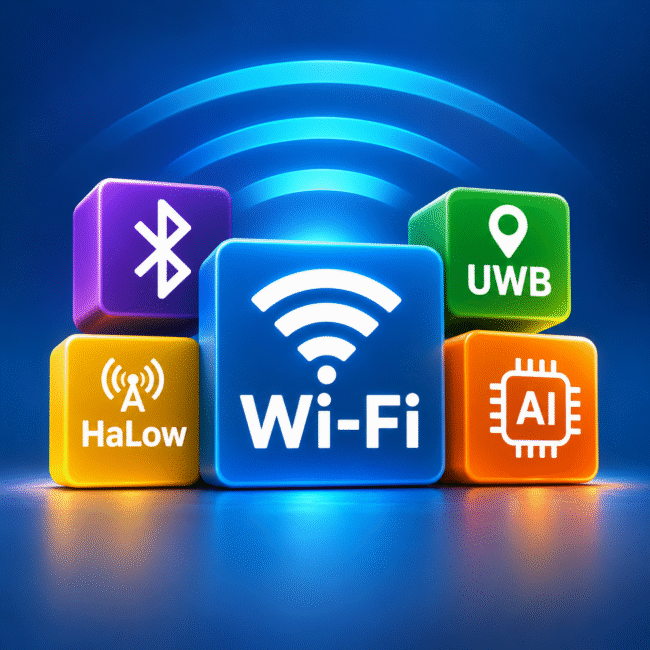
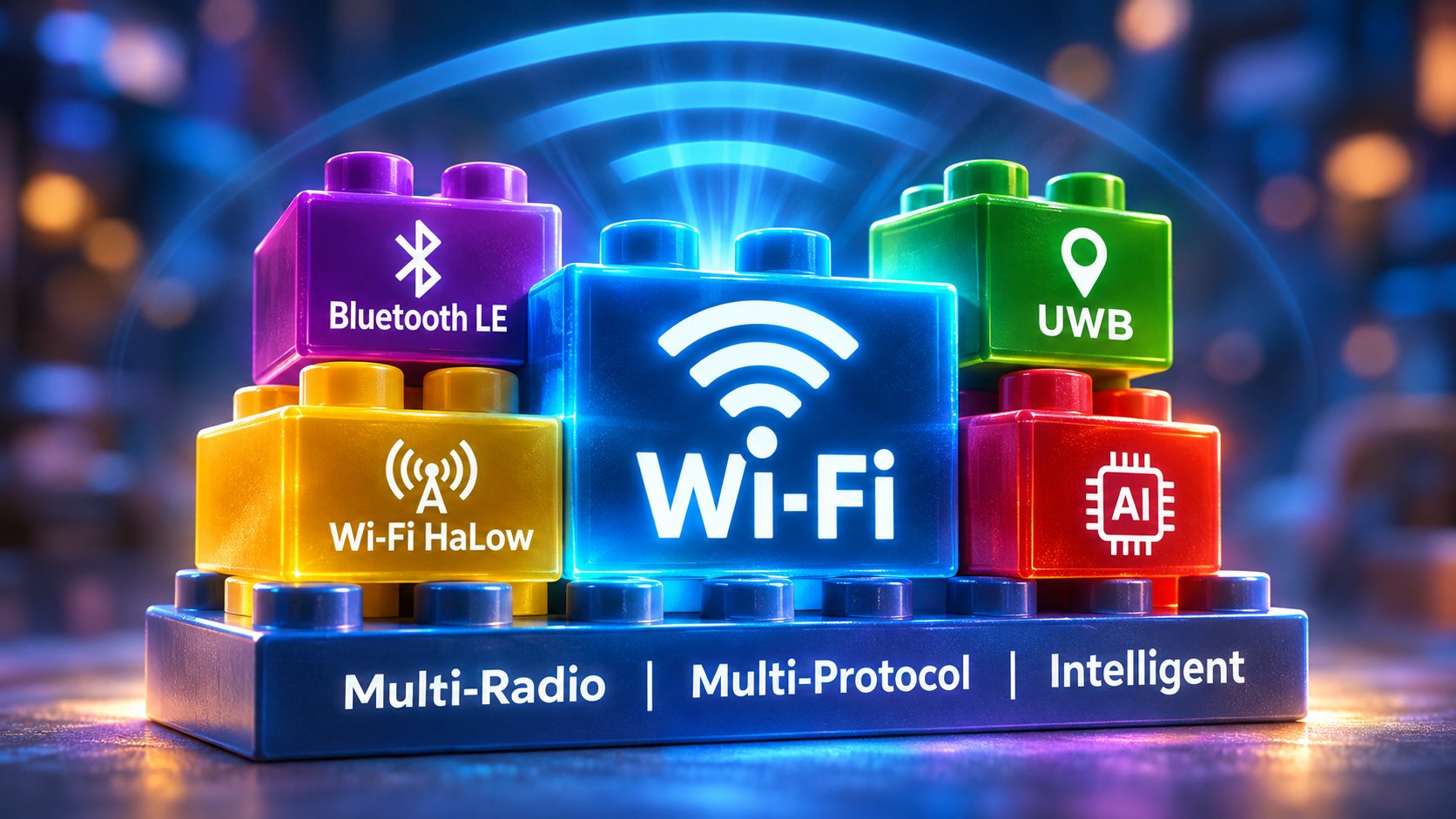
Consider what happens when we combine high-performance Wi-Fi connectivity with the precise positioning capabilities of UWB, the low-power connectivity of Bluetooth LE, and the extended reach of Wi-Fi HaLow. We can create wireless environments capable of connecting, locating, sensing, identifying, and authenticating devices and people. Wireless infrastructure becomes a source of contextual information about the physical world, as well as a means of transporting data. Couple this with AI at the edge, and a plethora of new and innovative use cases can be supported.
Meanwhile, the individual technologies continue to evolve:
- Wi-Fi: High-performance, reliable connectivity, sensing, and intelligent network operations
- Bluetooth LE: Low-power connectivity, LE audio, audio broadcast, positioning, ambient IoT, and emerging high-data-throughput applications
- UWB: Precision positioning, secure ranging, radar sensing, robotics, and physical AI
- Wi-Fi HaLow: Long-range, low-power IP connectivity for industrial, agricultural, and residential applications including AI at the edge
These capabilities are largely complementary – although in some cases, they may also overlap and compete. The opportunity is to develop products and platforms that exploit the strengths of multiple technologies, many of which are already mature and already comprise flourishing ecosystems.
The two coexistence challenges of multi-radio wireless
The transition towards multi-radio wireless is not without its pitfalls. The industry faces two distinct but interrelated coexistence challenges: Sharing hardware resources and sharing spectrum.
Hardware coexistence: Integrating multiple radios into a single device introduces challenges associated with shared antennas, RF front-end components, power budgets, and processing resources. Even radios operating in different frequency bands can interfere with one another within a device. Wi-Fi 8 addresses some aspects of in-device coexistence, but further innovation in silicon architectures, filtering, antenna design, and cross-radio coordination will be required.
Spectrum coexistence: Wi-Fi and Bluetooth already share the 2.4 GHz band, while the potential expansion of Bluetooth into the 5 GHz and 6 GHz bands could introduce new coexistence challenges. UWB also operates across frequencies overlapping the 6 GHz Wi-Fi band, albeit under very different power and regulatory constraints.
Both challenges place new demands on RF engineering, wireless testing, design validation, and certification. Testing individual radios in isolation will increasingly need to be complemented by testing multiple radios operating concurrently under real-world conditions. Adding wireless capabilities must not come at the expense of reliability, performance, or energy efficiency.
AI as the intelligence layer for multi-radio wireless
The emergence of AI at the wireless edge adds another dimension. As devices and infrastructure acquire more local processing capabilities, information derived from multiple radios could increasingly be combined and interpreted in real time. AI could help select connectivity technologies, interpret sensing and positioning data, and automate increasingly complex wireless environments. For robotics and physical AI in particular, the combination of reliable connectivity, precise positioning, environmental sensing, and local intelligence could become a critical enabler.
Tomorrow’s wireless silicon platforms may increasingly be differentiated by the breadth of their radio capabilities, their ability to coordinate those capabilities, and the intelligence they incorporate.
Wi-Fi remains the focal point
Wi-Fi’s enormous installed base, ubiquitous IP connectivity, mature ecosystem, and continued technological evolution make it a natural focal point for multi-radio wireless solutions. For enterprise networking vendors, residential broadband service providers, and device manufacturers, adjacent wireless technologies represent opportunities to extend the value of existing products and infrastructure into entirely new application areas.
This is why we are expanding the scope of WiFi NOW World Congress 2027, taking place in Mountain View, California, on April 19–21 under the theme The Rise of Intelligent Connectivity. Wi-Fi remains at the heart of our programme, complemented by dedicated sessions on UWB, Bluetooth LE, and Wi-Fi HaLow. Our RF Innovation & Design Validation Testing Forum will address the associated engineering challenges.
“We believe some of the biggest new opportunities in wireless will emerge at the intersection of these technologies. The next era of wireless is not about one radio doing everything. It is about making multiple radios work intelligently together to deliver capabilities that no single wireless technology can deliver on its own,” – Claus Hetting, WiFi NOW CEO & Chairman.
/Claus.