By Claus Hetting, WiFi NOW CEO & Chairman
Smart antennas that dynamically configure radiation patters to boost Wi-Fi performance used to be the stuff of costly, high-end enterprise APs only. The experts at Adant now say that a new generation of simplified beam-switching smart antennas designed to deliver big performance benefits can now be incorporated into APs, mesh units, and gateways at no additional cost compared to traditional passive solutions. This innovation could introduce a dramatic shift in Wi-Fi performance, the company says.
What is the fastest way of boosting Wi-Fi throughput performance – and not least end-user QoE – with minimal changes in AP hardware and at no additional manufacturing cost? A new generation smart antennas from the experts at Adant now promise surefire significant benefits in coverage, speed, and reliability. Smart antennas are gradually becoming a no-brainer design decision in particular because the performance boosts can now be achieved at no additional cost, Adant says.
“The component and software cost of smart antennas is now around one dollar per 2×2 tri-band AP, which is comparable to the cost of passive antennas. There’s a small additional integration cost, but this work has also been substantially simplified after we’ve pushed the software from the kernel to the application level,” says Adant CEO & Co-founder, Daniele Piazza. Adant smart antenna solutions are currently being used in APs and gateways from Tier-1 ISPs and large networking vendors.
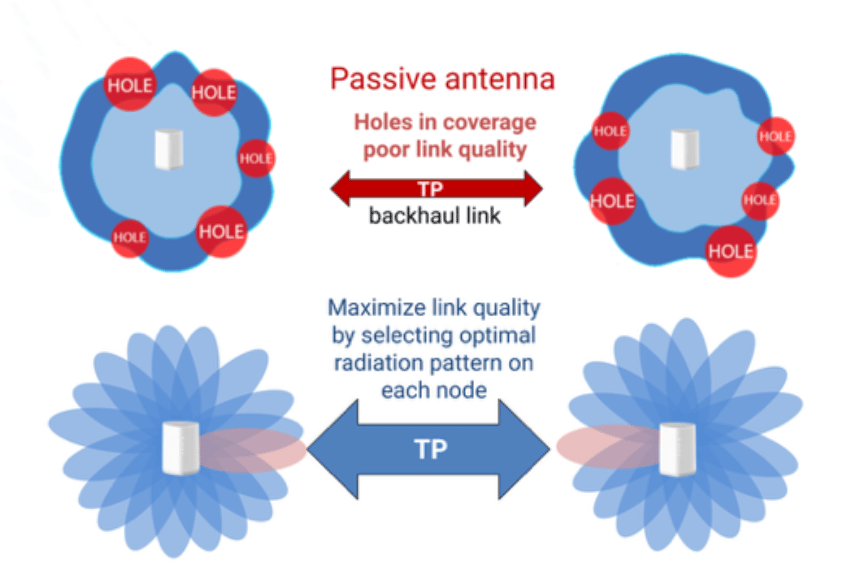
Smart antennas can be used to boost the performance of both mesh backhaul and fronthaul although the mesh backhaul impact is the most signifiant. “For mesh backhaul, smart antennas systematically deliver 6 dB signal gain which translates into about a 40% improvement in throughput. On the fronthaul side – meaning towards the client device – the average gain is 3 dB or around 20% better throughput, which is also something that can really be felt in terms of quality of experience,” Daniele Piazza says.
Smart antennas work by maximising link quality by selecting the optimum radiation pattern on each Wi-Fi radio when connecting – for example – two mesh units. The performance boost is higher for mesh backhaul than between an AP and and client device (fronthaul) because smart antennas can be configured at both ends of the link, Adant says. For fronthaul one of the most important benefits is much-improved whole-home coverage.
Adant’s smart antenna solutions support all Wi-Fi bands as well as all current Wi-Fi standards and the company says there are specific additional benefits when using smart antennas in conjunction with the upcoming Wi-Fi 8 standard. We’ll have more to say about that shortly.
/Claus.