By Claus Hetting, WiFi NOW CEO & Chairman
LitePoint achieves PHY-level validation of Qualcomm’s Wi-Fi 8 platform
Testing is one of the first parts of the ecosystem that needs to be in place in order to enable a new generation of Wi-Fi platforms, and this week LitePoint announced that it has achieved ‘comprehensive design validation and performance testing on Qualcomm’s Wi-Fi 8 technology’. LitePoint is using its IQxel-MX platform to perform the PHY-level validation testing, the company says in a press release here. Qualcomm has not as yet formally announced Wi-Fi 8 platforms but has quietly said that they will be released at Mobile World Congress in Barcelona in February – read more here.
LitePoint says the IQxel-MX platform now supports validation of critical Wi-Fi 8 functionality including features for advanced error coding, smarter MIMO modulation, optimised rate adaptation, extended range, and improved spectrum efficiency. “These innovations aim to deliver ultra-low latency, higher capacity, and smarter connectivity. This foundation will power the next wave of applications—from immersive AR/VR and intelligent IoT to mission-critical enterprise and connected home experiences,” LitePoint says.
Wi-Fi Alliance introduces new 20 MHz-only Wi-Fi 7 certification for IoT
Wi-Fi Alliance this week introduced a new Wi-Fi 7 certification for devices operating in 20 MHz channels only. The move is intended to “unlock the next level of performance, efficiency, and reliability for IoT,” Wi-Fi Alliance said in a press release here. Wi-Fi 7 already delivers plenty of performance benefits through marquee features MLO, DL/UL MU-MIMO, and MR-U (Multiple Resource Units) and now these features will be made available for certification for simpler, IoT-style devices.
Benefits of 20 MHz-only Wi-Fi devices include simplicity and lower power consumption, more reliable connections in crowded environments, and better coverage (due to concentration of signal energy), Wi-Fi Alliance says. The new certification program will extend the benefits of Wi-Fi 7 to – for example – fully Wi-Fi 7 certified battery-operated, low-cost sensors, appliances, wearables, and smart home products.
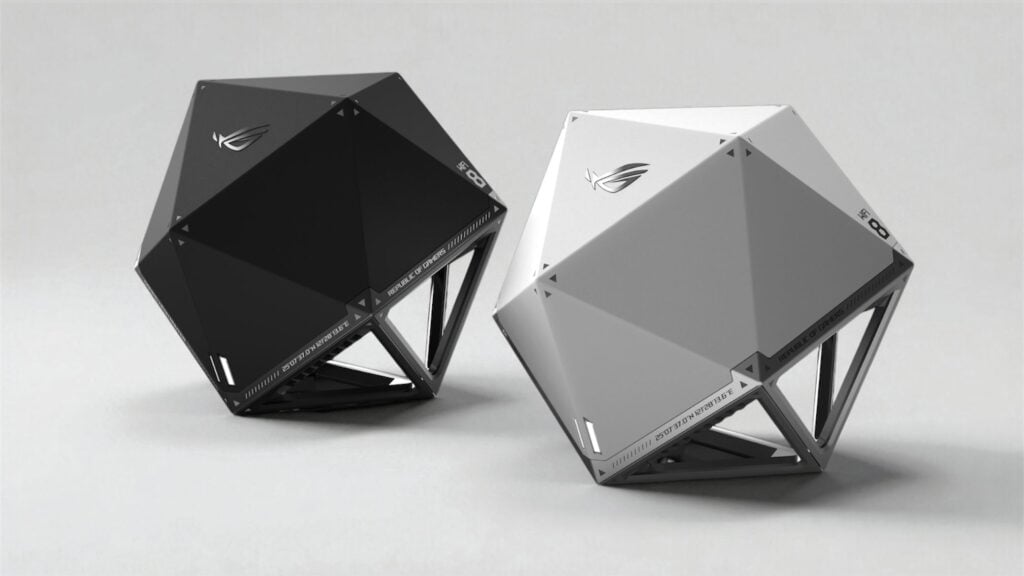
ASUS debuts ‘ROG NeoCore Wi-Fi 8 concept router’ at CES
This week at CES, Taiwan’s ASUS becomes the first router manufacturer to announce a Wi-Fi 8 product – or at least a ‘Wi-Fi 8 concept router’. The ultra-futuristic design is of course an appeal to ASUS key market segment – gamers – and although no client devices are available yet (except presumably in the lab) ASUS says it has conducted “the first real-world throughput test at CES 2026, marking a new era where WiFi 8 technology moves from concept to real-world application.”
ASUS says the new router will deliver ultra-stable connectivity including 2 times the mid-range performance (they don’t specify what that means), twice the IoT coverage, and up to six times lower latency. No word on when it will be available for purchase. Read the full press release here.
Synamedia, HUMAX Networks, and RocNet Supply team up for Wi-Fi 7
The three companies announced a strategic collaboration in December of 2025 aimed at making Synamedia Gravity – a device and service orchestration platform – readily available for ISPs. HUMAX Networks will provide the Wi-Fi 7 devices while RocNet Supply will act as the sales and distribution partner, Synamedia says in a press release here. “Together, the companies offer a turnkey solution that significantly shortens deployment timelines for broadband service providers, enabling them to quickly launch new residential and small- to medium-sized business (SMB) broadband services,” the company says. The solution is on display at CES in Las Vegas this week. Synamedia Gravity is a broadband management platform that includes managed Wi-Fi, security, Internet backup, voice, and self-service tools – for more read here.
/Claus.