By Claus Hetting, WiFi NOW CEO & Chairman
Extreme Networks says its second-generation agentic AI platform has already saved customers more than a thousand troubleshooting work hours collectively during its first month. AI utilisation has increased by 900%, while approximately one third of Extreme Platform ONE customers have already migrated to the new platform. Extreme is also preparing to introduce autonomous AI operations and on-prem distributed AI processing running on enterprise networking infrastructure.
So what can agentic AI do for enterprise network operations? Extreme Networks says it is seeing the first results of its move from conversational AI towards autonomous network operations. Its new Extreme Agent ONE Coworker is designed to work alongside network administrators, identifying problems, recommending corrective actions, and assisting with troubleshooting across enterprise networks. The company says the transition is already changing how customers use AI and engage with technical support, according to Stephen Spellicy, VP of Product Marketing and Solutions at Extreme Networks.

“The adoption and usage of our new platform has been remarkable, and we’re getting precisely the results we were looking for. Using Agent ONE Coworker mode, our customers now engage with our technical assistance centre from inside Agent One more than forty times more often than previously, and 58% of issues are being resolved without needing human support. And we think this is just the beginning – the numbers will continue to get better as customers get used to the convenience of using new AI workflows,” Stephen Spellicy says.
He also points out that migration to the new platform is steady yet fully voluntary. “Rather than forcing customers onto the new platform, our approach is to allow backward-compatible subscriptions so that customers can keep using older products until they are ready to move. In a market where upgrades are often driven with a stick rather than a carrot, this level of early adoption is a powerful signal,” he says.
From conversational AI to an agentic AI coworker
Extreme describes Agent ONE Coworker as an ambient, context-aware AI assistant operating alongside network administrators inside Extreme Platform ONE. Rather than requiring operators to write out questions from scratch, Coworker understands the context of the user’s workflow. It assists with onboarding, configuration, troubleshooting, and escalation, while a feature called ‘nudge’ proactively identifies issues, explains what is happening, and recommends prescriptive remediation steps.
“A generic chatbot is useful, but AI system that understands your environment, your policies, your naming conventions, and the operational state of your network is something else entirely. And that’s exactly what we’ve achieved with Agent ONE Coworker,” Stephen Spellicy says. The platform also supports third-party environments, including Cisco and HPE devices, initially through SNMP, with broader API-based integrations planned. This extends the platform’s reach into multivendor enterprise networks.
Next step: Autonomous operations and an AI marketplace
Looking ahead, Extreme plans to extend Agent ONE with an autonomous ‘Operator mode’ in Q1 2027, enabling customisable skills developed by customers, partners, and technology alliances. The initiative will be supported by Extreme Exchange, the company’s agentic AI marketplace first introduced in May 2026. The marketplace is designed to provide an ecosystem of AI skills, plugins, and applications developed by Extreme, its partners, and customers (read more here).
Together, Operator mode and Extreme Exchange are intended to extend the platform beyond AI-assisted troubleshooting towards automated execution of network operational tasks.
Bringing AI processing onto the enterprise network
Extreme is also preparing what it describes as an industry-first on-premises enterprise AI solution, planned for release during the first half of 2027. Its forthcoming Extreme Exchange Zones architecture will enable AI applications to run locally rather than relying exclusively on Cloud infrastructure, addressing enterprise requirements for data sovereignty, privacy, operational resilience, and cost efficiency. Extreme plans to make use of computing resources already available inside enterprise access points and switches.
“Through containerisation, those free cores can be virtualised and pooled to support inferencing workloads closer to where network data is generated. The underlying capability already exists inside Extreme’s infrastructure, even if our customers do not yet see it as a packaged product. That’s coming first half of next year,” Stephen Spellicy says.
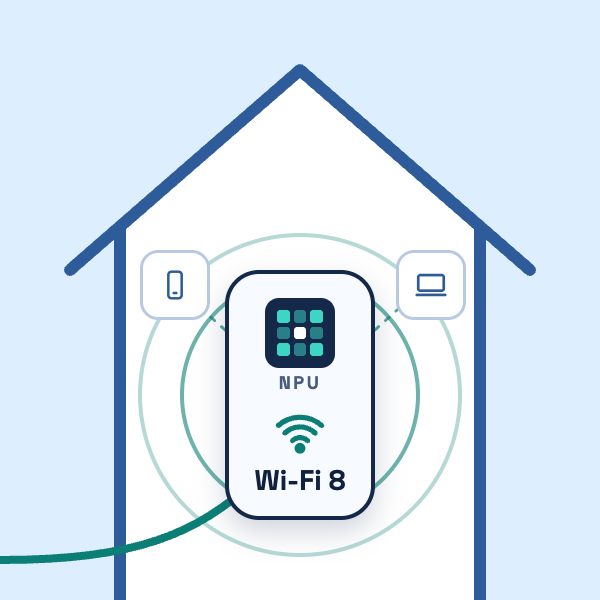
The architecture is designed to turn existing networking infrastructure into a distributed AI computing platform, potentially reducing the need for dedicated processing hardware at individual locations. The development also coincides with the arrival of Wi-Fi 8 silicon platforms incorporating dedicated AI processing capabilities, including NPUs. These new hardware capabilities could further support distributed AI inferencing at the network edge as Wi-Fi 8 equipment enters the market.
Extreme’s roadmap now includes three successive – and formidable – AI developments: Today’s Agent ONE Coworker mode for agentic AI-assisted operations, next year’s autonomous Operator mode including Extreme Exchange for extensible agentic workflows, and finally Exchange Zones for distributed on-premises AI processing, also coming next year.
/Claus.