By Claus Hetting, WiFi NOW CEO & Chairman
Wi-Fi Alliance and prpl join forces to accelerate service provider Wi-Fi
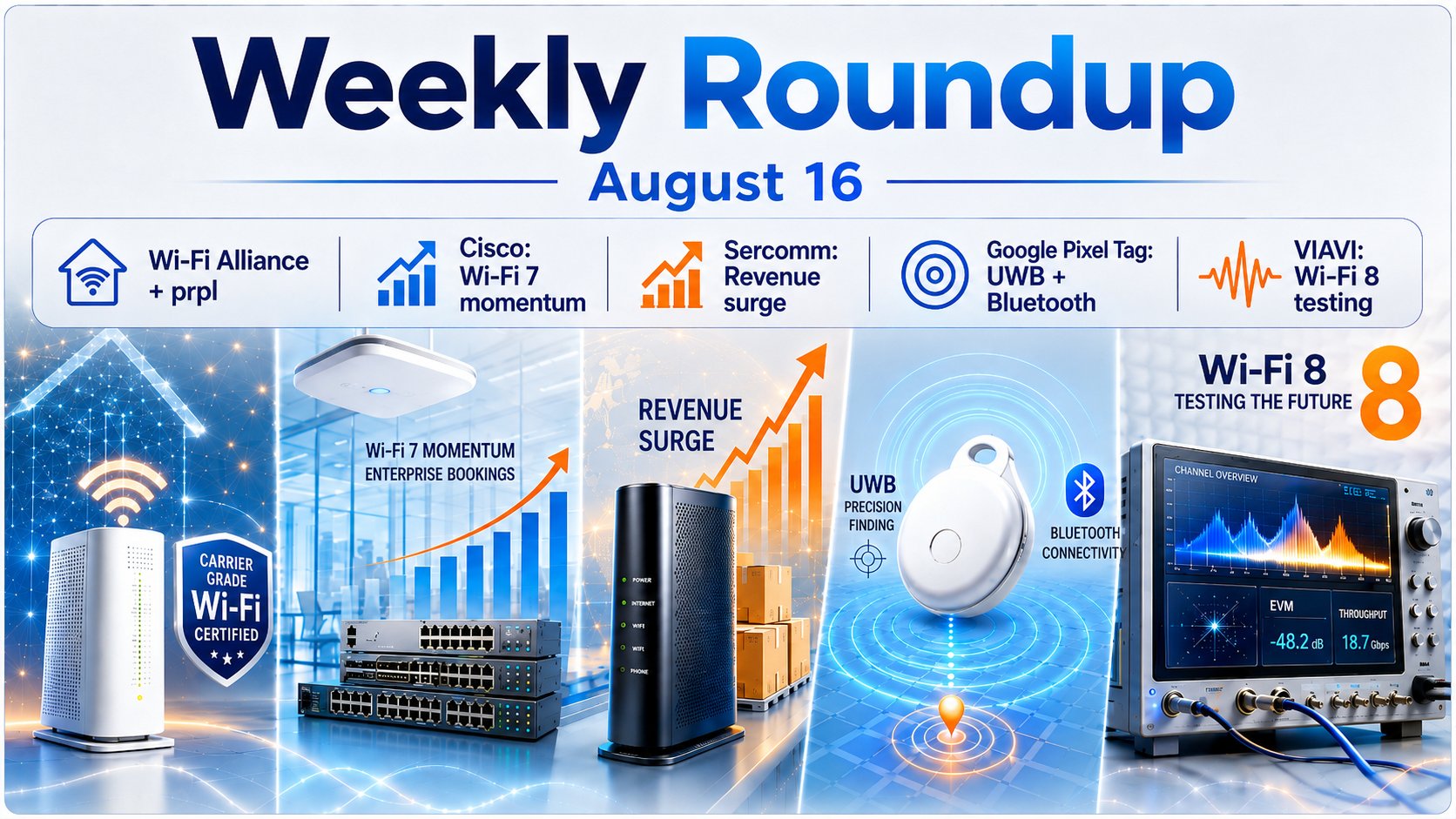
Last week Wi-Fi Alliance and prpl Foundation announced an expanded collaboration intended to improve how new Wi-Fi generations are implemented, validated, and deployed in broadband CPE. The new collaboration is important because Wi-Fi standards may be interoperable at the radio level while gateways still require substantial software integration, validation, and operator-specific engineering.
A close between certification and an increasingly popular (open source) CPE software stack such as prpl could shorten deployment cycles for Wi-Fi 7 and ultimately Wi-Fi 8. That said, it is not entirely clear exactly what activities will take place as part of the new cooperation. Read more here.
Cisco: Wi-Fi 7 already accounts for more than half of enterprise wireless bookings
Last week’s financial reporting and earnings presentation by Cisco revealed that more than half of Cisco’s current bookings are for Wi-Fi 7 equipment. Overall, Cisco says wireless bookings grew by an impressive 25% year-on-year. The results suggests Wi-Fi 7 has crossed from early adoption into the centre of Cisco’s enterprise wireless business – and the 50% figure is also a much stronger pro-Wi-Fi 7 market signal than most other market forecasts seem to indicate.
Cisco delivered exceptionally strong operating results and clear evidence of a networking upgrade cycle, but Wall Street sold the shares because margins came under pressure and expectations around AI had become extraordinarily high. More information here.
VIAVI brings real-world RF channel emulation to Wi-Fi 8 testing
Last week VIAVI introduced the Vertex 6.0 – which the company describes as “the first channel emulator designed specifically for next-generation 6G and Wi-Fi 7/8 testing”. It offers 400 MHz instantaneous bandwidth and frequencies to 23.6 GHz. For Wi-Fi 7/8, VIAVI says it natively supports 320 MHz channels, 4096-QAM, and configurations from 2×2 to 8×8. The purpose of the platform is to emulate real-world RF propagation conditions in the laboratory, the company says.
Reproducing complex real-world RF environments (for validation, for example) will become increasingly important because Wi-Fi 8 prioritises reliability, coordination, and consistent performance rather than headline peak speed. More information here.
Google’s new Pixel Tag suggests UWB and Bluetooth Channel Sounding could be better together
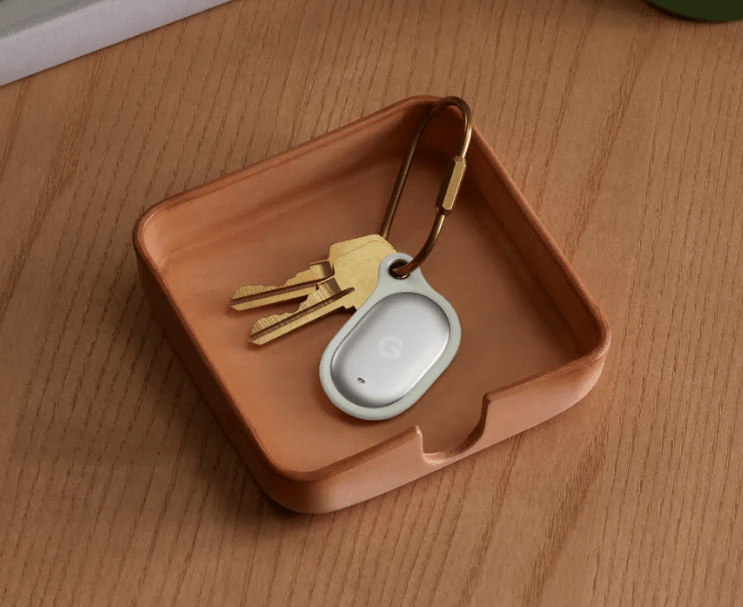
Also last week: Google unveiled its first Pixel Tag (a product similar to the Apple AirTag) on August 12. Perhaps surprisingly, device uses both Ultra-Wideband and Bluetooth Channel Sounding for precision finding. Google says the combination provides visual distance and directional guidance. The Pixel Tag launches November 11 for $29 individually or $99 for a pack of four.
Bluetooth Channel Sounding measures distance between two Bluetooth devices using phase-based ranging or round-trip timing. Bluetooth SIG positions this method as a way to add secure, fine-ranging capability to devices that already have Bluetooth, potentially without requiring a separate ranging radio. In the case of the Pixel Tag, the biggest benefit of including both technologies is probably that Bluetooth enables determining the location of devices that do not support UWB. Read more here.
Sercomm Q2 surges a remarkable 69% – so what is driving the boom?
The answer is that we don’t know exactly – but it is indeed a remarkable result on a broadband equipment market that is mostly flat. Sercomm highlighted strong demand for fibre access, cable broadband, 5G FWA and Wi-Fi 7, and management expects second-half 2026 operations to be stronger than the first half. Sercomm Corporation Chairman Wang Wei said he expects WiFi 7 to account for as much as 70% of new shipments in the second half of the year. Read more here.
/Claus.