By Claus Hetting, WiFi NOW CEO & Chairman
Wireless patient monitoring is one of the most demanding networking applications as extreme reliability and very high quality of service is required – and now Cisco & healthcare solutions provider Dräger are working together to make this happen. A new blog by Cisco – read it in full here – outlines how Dräger & Cisco network integration delivers precisely what is needed for precise and reliable patient monitoring.
Networking for healthcare – including Wi-Fi connectivity for patient monitoring – can be challenging to get right because QoS requirements are often extreme. Monitoring of real-time patient data can be so critical that getting it wrong could even be life threatening under certain circumstances. Now Cisco and Dräger – an international leader in medical safety and technology – are collaborating to take effective and highly reliable wireless patient monitoring to the next level, Cisco says in a new blog published here.

“Modern wireless patient monitoring systems use Wi-Fi connections to help transmit real-time patient data. Because these systems are often used in more intensive situations, they require ultra-low latency and minimal packet loss to provide alerts for medical staff. Issues such as interference, inconsistent coverage, and reliability gaps may contribute to delays or interruptions in vital monitoring data” says Shreyas Trivedi, Technical Leader Wireless at Cisco.
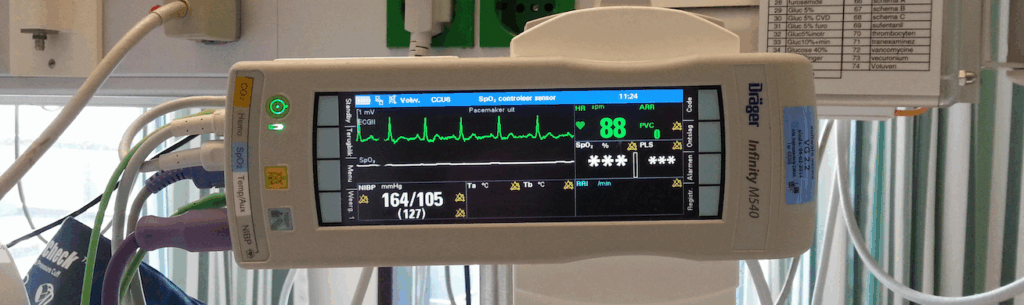
Cisco and Dräger is now configuring and testing high-reliability systems that connect devices – such as bedside as well as portable patient monitors – to Dräger’s Infinity Central Station (ICS) data collection center and beyond. Dräger says Wi-Fi 7 support is beneficial but networking solutions also need to support legacy Wi-Fi standards because of a substantial installed base of non-Wi-Fi 7 devices.
“To configure the high-reliability system, we’re using both UDP and TCP, dedicated SSIDs, and – in some cases – separate VLANs. The target is to deliver less than four seconds of waveform – meaning measurement – loss per hour per device. Dräger’s ICS is used to verify that measurements are received within the tolerance. As it turns out, the Wi-Fi network performs well within the defined low tolerance for waveform loss. The solution also includes verification feedback such that any disruption in connectivity between a monitoring device and the ICS is indicated on the screen of the device,” Shreyas Trivedi says.
Cisco’s Spectrum Expert Tool is used to repurpose older access points, Shreyas Trivedi says. “We use older access points to scan the spectrum, so that utilisation remains at optimal levels, ideally below 50% on the 2.4 GHz band. This is important to make sure that legacy devices receive the right level of service,” he says.
For the full blog including network configuration details and test data read more here. The blog is co-authored by Nilesh Doshi, Senior SW AP Manager, and Siva Padamata, Software QA Engineer, both of the Enterprise Networking Group at Cisco.
/Claus.