By Claus Hetting, WiFi NOW CEO & Chairman
What are the next major steps forward in the evolution of enterprise wireless technology and services? Trends to keep an eye on include simplified network assurance, AI-based user interfaces, the evolution from simple connectivity to smart spaces, advancements in security, and ultra-reliable mobility, said Bahador Amiri, Cisco’s Senior Director of Wireless Engineering, at WWC Dubai.
Cisco continues to hold a commanding lead in enterprise Wi-Fi with a footprint of 30+ million APs, more than 10,000 buildings enabled with wireless IoT, one billion devices connecting per day, and a whopping US$4 billion in yearly wireless revenues. This also means that Cisco has access to enormous amounts of wireless network performance data, a prerequisite for building effective AI-based operations.
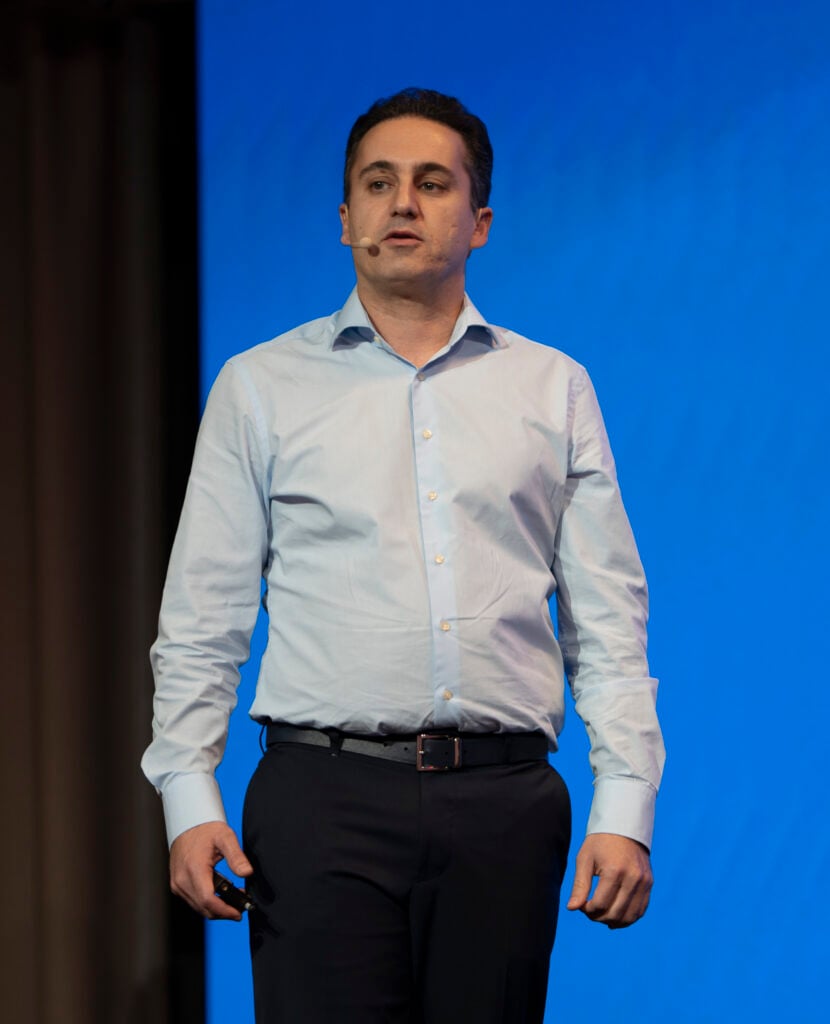
This has important implications for building systems for next-generation network assurance, said Cisco’s Bahador Amiri. “IT teams are becoming leaner, which means that network assurance has to become simpler and more automated. We’re rapidly moving from reactive towards automated assurance using AI in the background such that – in many cases – networks will be able to auto-remediate and even predict future problems, so that configurations can be optimised in advance,” Bahador Amiri said.
An example of Cisco AI operations includes AI-RRM (radio resource management), which optimises radio planning according to actual data traffic changes and trends. The density and usage patterns of Wi-Fi can vary significantly over time as users move around, which would otherwise seriously impact connectivity performance. Another AI component will be ChatGPT-style queries of network status, which will substantially simplify operations and hence save on IT support costs, Bahador Amiri said.
Another current Cisco focus area is Post Quantum Cryptography – or PQC – which is short for protecting networks and services from attack in the quantum computing era. “Quantum computers – which at this time exist only in the lab – can break the security systems that we have today. PQC aims to develop encryption methods that can resist attacks by quantum computers,” Bahador Amiri said.
Cisco is still heavily vested in ultra-reliable, ultra-low-latency mobility – for example for transport and industry – which in Cisco’s case means that high-end Cisco APs can now be configured to support (proprietary) Ultra-Reliable Wireless Backhaul on one of four radios. This is one more way in which Cisco is championing Wi-Fi infrastructure that supports much more than ‘just Wi-Fi’ but of course with Wi-Fi as the indispensable basis of network infrastructure.
Bahador Amiri said that the number of Cisco APs serving IoT use cases today has reached 4.9 million APs, a huge step up from only 1 million APs in 2023. “Wireless IoT has typically been fragmented. complicated, and expensive – with plenty of proprietary solutions deployed. We’re focusing on simplifying all of this by using our APs as the platform for IoT services as well as our software stack on top,” he said.
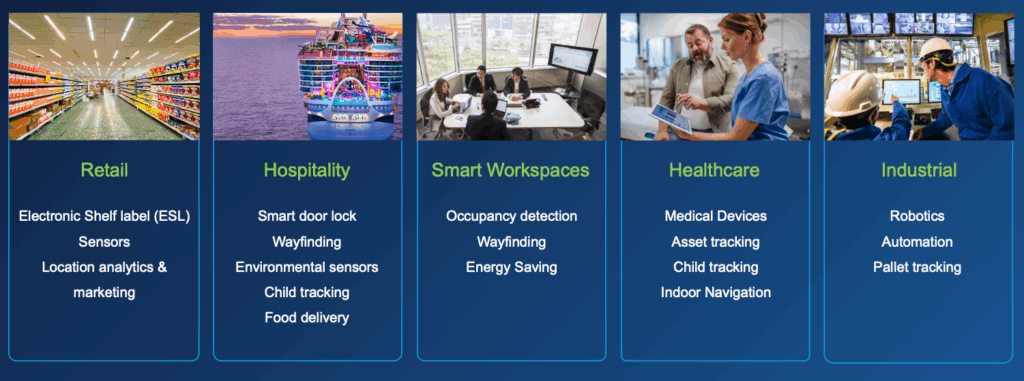
Perhaps one of the most impressive recent Cisco solutions is Cisco Spaces which effectively transforms enterprises into ‘smart spaces’ for asset tracking, wayfinding, IoT sensor support (energy and environmental management), occupancy analysis, and more. To enable this Cisco’s flagship 9178 Wi-Fi 7 AP includes four Wi-Fi radios, BLE 6.0, ultra-wideband, and GPS. For more you can access a video of Bahador Amiri’s full WWC Dubai presentation here.
/Claus.