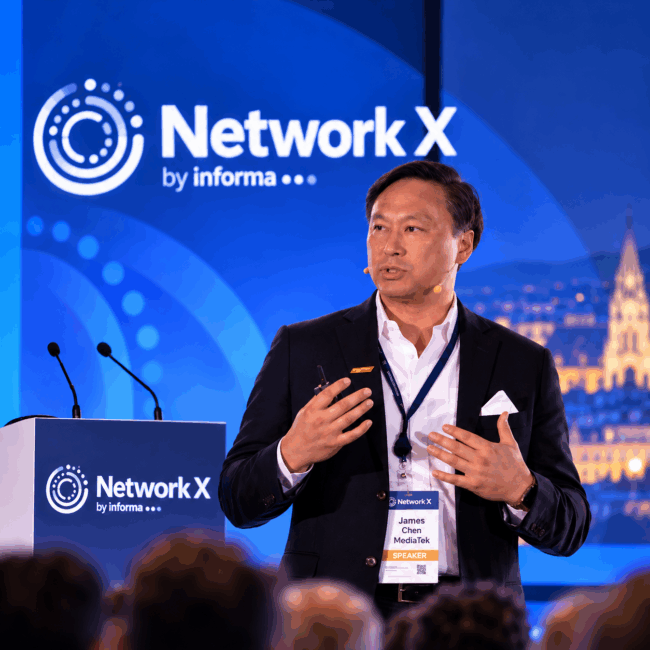
By Claus Hetting, WiFi NOW CEO & Chairman
Wi-Fi 7 silicon leader MediaTek invested early in development-ready RDK-B and prplOS platforms, and the strategy is now paying dividends. Deutsche Telekom has just announced a milestone of one million deployed RDK-B-powered routers with MediaTek as the Wi-Fi 7 SoC provider – and MediaTek remains the only Wi-Fi SoC vendor with commercial Wi-Fi 7 gateway deployments based on both RDK-B and prplOS. The company expects its open-source strategy to become even more valuable as Wi-Fi 8 rollouts begin within a year or two.
As the ISPs move quickly towards the adoption of open-source software for home gateways, leading Wi-Fi SoC vendors are increasingly incorporating RDK-B and prpl-ready platforms into their solutions. Although no authoritative market data exists, WiFi NOW estimates that perhaps 20% of home gateways today run RDK-B or prplOS (RDK-B represents the dominant share), which means growth opportunities for Wi-Fi SoC vendors supporting the two platforms are substantial. MediaTek’s early start has delivered precisely what the company wanted: A distinct competitive advantage.

“We’ve invested early in two areas: Developing the right feature-rich and highly competitive Wi-Fi 7 and Wi-Fi 8 platforms – and making sure that our technology is available on RDK-B and prpl platforms. We believe both are important and share similar goals, such as hardware diversity, no vendor lock-in, and perhaps – longer term – even a home broadband app marketplace. All of this drives innovation and cost-efficiency for service providers. That’s good for us and for the entire ecosystem,” says Stephane Renaud, Director of Product Technology Marketing at MediaTek.
MediaTek says it was the first Wi-Fi SoC vendor to participate in a commercial Tier-One prplOS gateway deployment – in this case with a major ISP in Europe – and Deutsche Telekom’s recent Speedport 7 launch (also powered by RDK-B and MediaTek Filogic SoCs) has become the flagship project in the category, the company says. Deutsche Telekom says the Speedport 7 platform has performed exceptionally well, in particular highlighting RDK-B’s telemetry and management capabilities (read more here). Deutsche Telekom says the Speedport 7 is its “most successful gateway product launch ever.”
MediaTek made its Banana Pi R4 reference platform featuring an open-source hardware design and SDK available for early development in April of 2024. The platform was originally designed for OpenWrt and has since been adapted for RDK-B and prplOS with separate releases, the company says. “This development platform requires no contract and is fully open, which means it gives OEMs and operators immediate access to a complete development platform without the traditional NDA process. We’ve also contributed upstream Wi-Fi drivers for the full platform,” Stephane Renaud says.
WiFi NOW’s TAKE: Today, nearly every major operator launching a new gateway software strategy is evaluating either RDK, prpl, or a combination of the two. Five years ago, proprietary software was the default. Today, open-source gateway platforms have become the strategic direction for many of the world’s largest broadband providers. MediaTek continues to be exceptionally well positioned to capitalise on the global move towards open-source. The shift—from proprietary, vendor-specific software to open, Linux-based platforms with standardized interfaces—is arguably the most important architectural change in home gateways since the introduction of broadband itself.
Meanwhile, Wi-Fi 8 Filogic SoCs from MediaTek are already available and the first Wi-Fi 8 products are expected to reach markets some time next year. “Wi-Fi 8 is another excellent opportunity for ISPs to embrace all the benefits of open-source platforms. We’re already participating in customer evaluations, demos, and RFPs,” Stephane Renaud says.
Unlike proprietary gateway software, RDK-B and prplOS separate operator software from the underlying hardware through standardized interfaces running on Linux. This allows operators to change chipset or gateway suppliers without rewriting higher-level management software, reducing vendor lock-in while accelerating innovation, feature development, and software updates.
/Claus.