By Claus Hetting, WiFi NOW CEO & Chairman
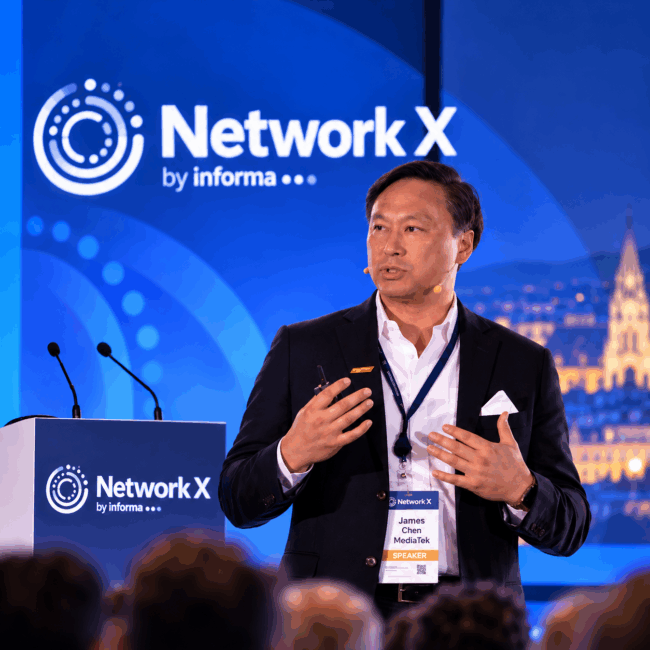
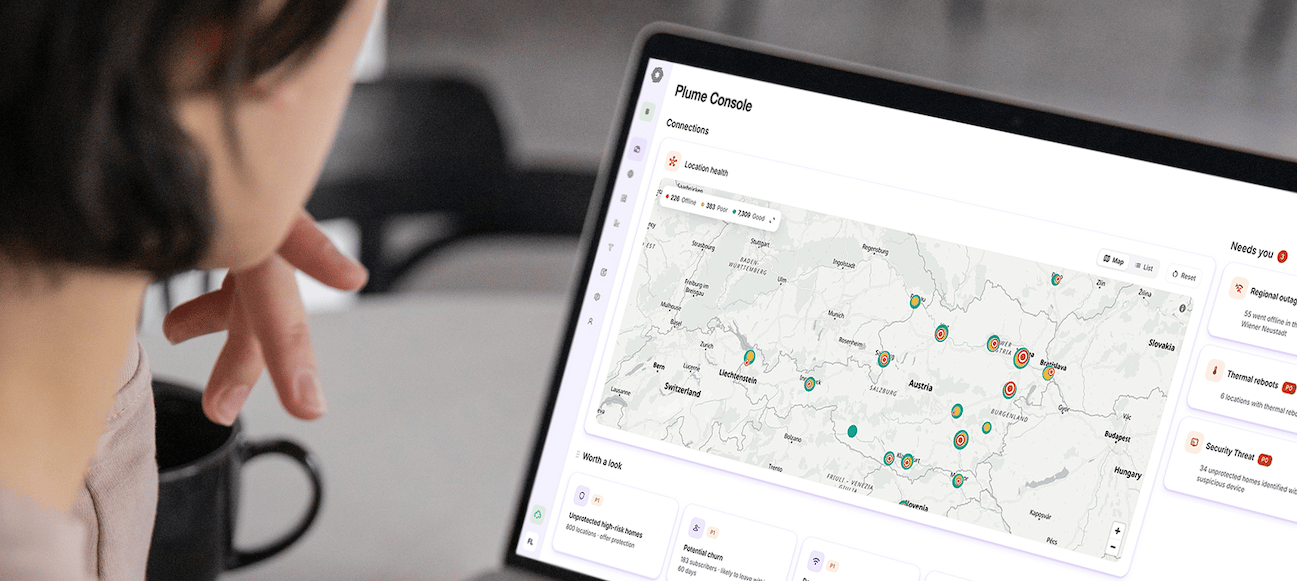
Agentic AI is everywhere – but getting end-to-end ISP operational platforms right is still no small feat. This week at Network X, Plume launched what is likely the market’s most comprehensive end-to-end Agentic AI operational platform – modestly dubbed ‘Plume Console’ – allowing ISPs to investigate and manage everything from individual connectivity problems to major network-wide operational challenges.
What do you do when you have access to connectivity data from more than 60 million homes and hundreds of millions of connected client devices as well as CPEs? Creating the mother of all Agentic AI operational platforms for ISPs is an obvious strategic choice – but getting it right is another matter. Plume Console, launched today at Network X, may indeed be that platform. It is the crowning achievement so far of the company’s radical transformation that started with the appointment of Dan Herscovici and a new executive team early last year.
Plume says Console gives ISP teams a single place to investigate subscriber issues, create and deploy agents, and direct actions across Plume WiFi, Plume Security, and Plume Care platforms as well as existing business systems. “It puts the platform’s intelligence and automation directly in the hands of the teams responsible for subscriber experience and business performance,” Plume says in today’s press release. The solution directs AI at a veritable ocean of home broadband connectivity data.
The idea – of course – is to reduce ISP workloads, continuously resolve QoE issues, and ultimately restructure ISP operational costs. Plume says its existing platform already resolves the vast majority of customer experience issues automatically while Console aims to address the remainder with AI agents investigating problems, recommending corrective actions, and automating additional workflows.
A hierarchy of AI agents designed to investigate and resolve problems
Plume Console comes with ready-made agents for network operations, security analysts, care teams, and marketers. Engineering teams can also build their own agents for specific technical workflows. Importantly, the platform uses a structured hierarchy of specialised, deterministic agents to monitor, investigate, and act on network and subscriber conditions including outages, device disconnections, thermal events, application performance degradation, and security issues.
Findings appear through a prioritised action board, dynamic insight tiles, and detailed reporting views. ISP teams can move from a network-wide view of millions of connected homes down to the performance of a single device or application session. In other words: Plume’s enormous repository of connectivity data becomes actionable operational intelligence.
From 55 offline homes to a single Netflix streaming session
During a demonstration for WiFi NOW, Plume showed how Console identified 55 clustered offline homes belonging to an unnamed ISP in Austria. With a single ‘investigate’ command, the system determined a likely upstream cause rather than 55 individual residential connectivity failures. Console then deployed another monitoring agent to track the in-home experience of affected subscribers.
In another example, the platform traced repeated thermal reboots of Wi-Fi extenders to device placements on dusty floors, suppressed fan operation, temperature conditions, and firmware behaviour. This illustrates how Plume Console correlates multiple conditions to identify likely root causes rather than simply reporting symptoms.
The demonstration also showed how Console can drill down from a network-wide 92% positive streaming experience rate to an individual household, device, and Netflix streaming session. The platform identified opportunities to improve the subscriber’s experience, including repositioning a Wi-Fi extender.
The diagnostic granularity is remarkable – but equally important is the speed with which ISP teams can move from identifying a problem to understanding its likely cause. This is where Agentic AI could substantially reduce the cost and complexity of operating residential broadband networks.
Closing the loop between diagnostics and customer care
Equally significant is Console’s ability to initiate corrective action directly with subscribers. In another demonstration, the platform identified an IoT device experiencing unusually frequent disconnections and initiated a customer care journey. The subscriber received step-by-step recovery instructions on his smartphone, resolving the problem without contacting support.
Such closed-loop workflows could drive down customer support costs for operators managing millions of connections. Rather than treating network operations, engineering, and customer care as separate disciplines, Plume Console connects them through a common intelligence and automation platform. The same connectivity data can identify systemic problems, investigate subscriber complaints, and initiate corrective actions, Plume says.
Plume’s transformation takes another major step forward
Altogether, the demonstration disclosed to WiFi NOW showed a remarkably intuitive and smoothly running interface combining network-wide intelligence, granular diagnostics, and corrective actions. Perhaps most importantly, Plume appears to have turned its enormous repository of residential connectivity data into a practical operational platform for ISPs. Plume Console has also thrown down the gauntlet to competitors, as the platform could conceivably become the industry benchmark.
If the platform’s capabilities translate into measurable improvements in operational efficiency and subscriber experience at scale – which we expect they will – Plume Console could become one of the most consequential AI-based product developments for ISP operations on the market. It is perhaps the clearest indication yet that Plume’s transformation under Dan Herscovici and his team is delivering real results.
/Claus.