By Claus Hetting, WiFi NOW CEO & Chairman
Deutsche Telekom is moving towards a more open, vendor-independent home Wi-Fi ecosystem while preparing for a new generation of AI-powered residential services. Speaking to WiFi NOW at Wi-Fi World Congress Europe, Pedro Bandeira – Senior Vice President of Home Products at Deutsche Telekom – explained how the operator is transforming its gateway business, expanding its use of 6 GHz, and preparing to bring AI directly into the connected home.
For Deutsche Telekom, the future of residential Wi-Fi is about much more than introducing the next generation of wireless technology. It is also about taking control of software, reducing dependence on hardware vendors, and using AI to deliver a better customer experience. That was the message from Pedro Bandeira, Senior Vice President of Home Products at Deutsche Telekom, who joined the Wi-Fi World Congress Europe for a conversation about the operator’s home connectivity strategy.
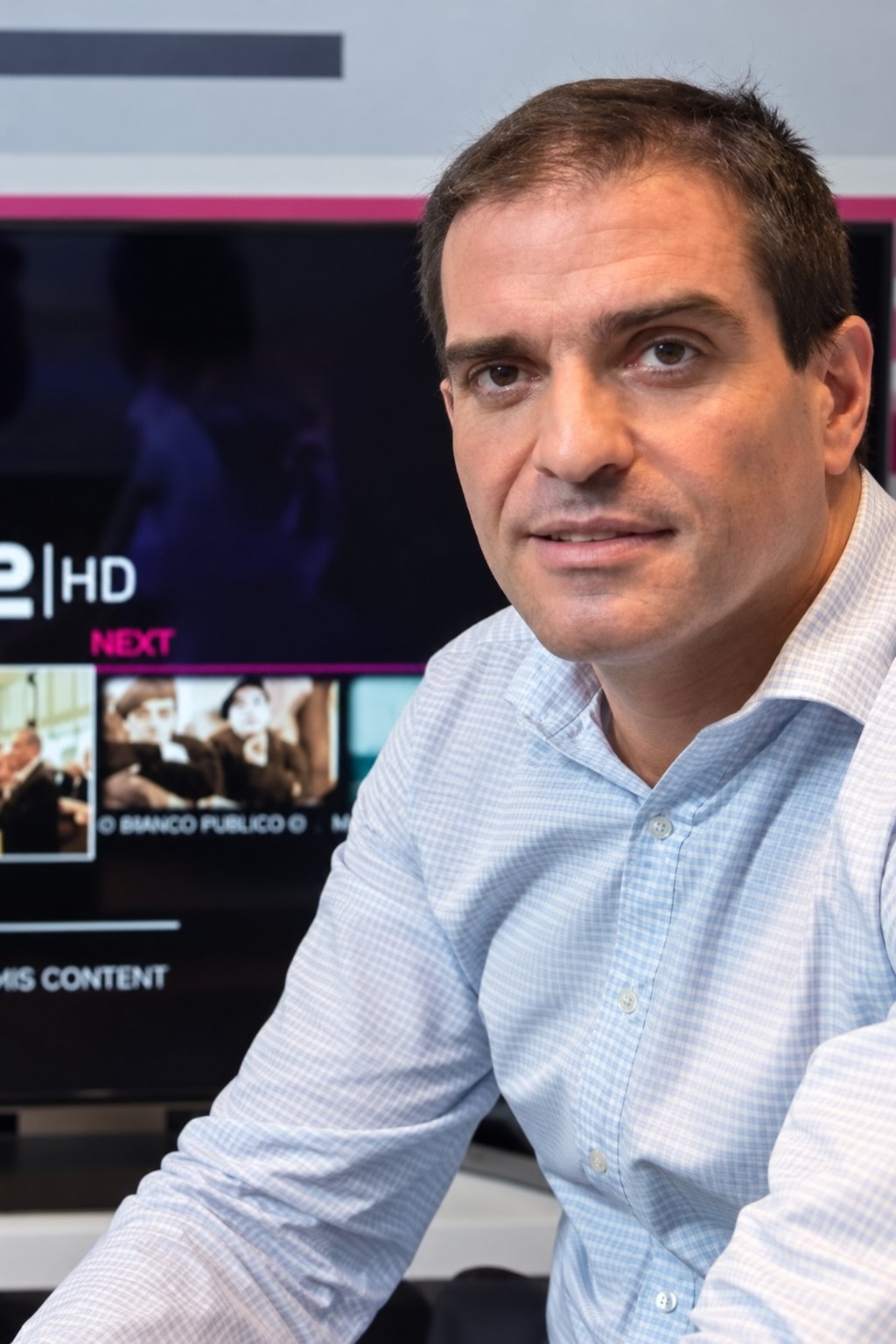
Deutsche Telekom’s latest Speedport 7 Wi-Fi 7 gateway reached product maturity faster than previous Deutsche Telekom (German) launches, the operator has successfully combined chipsets from competing silicon vendors, and AI is now helping the company identify and resolve customer connectivity problems. Perhaps most significantly, Deutsche Telekom is also reconsidering its approach to 6 GHz Wi-Fi, with the expectation that the band will become a mainstream feature across its future home gateway portfolio.
Enjoying this story?
Leave your email here and we'll get you all the latest Wi-Fi news.
Speedport 7: Breaking the traditional gateway model
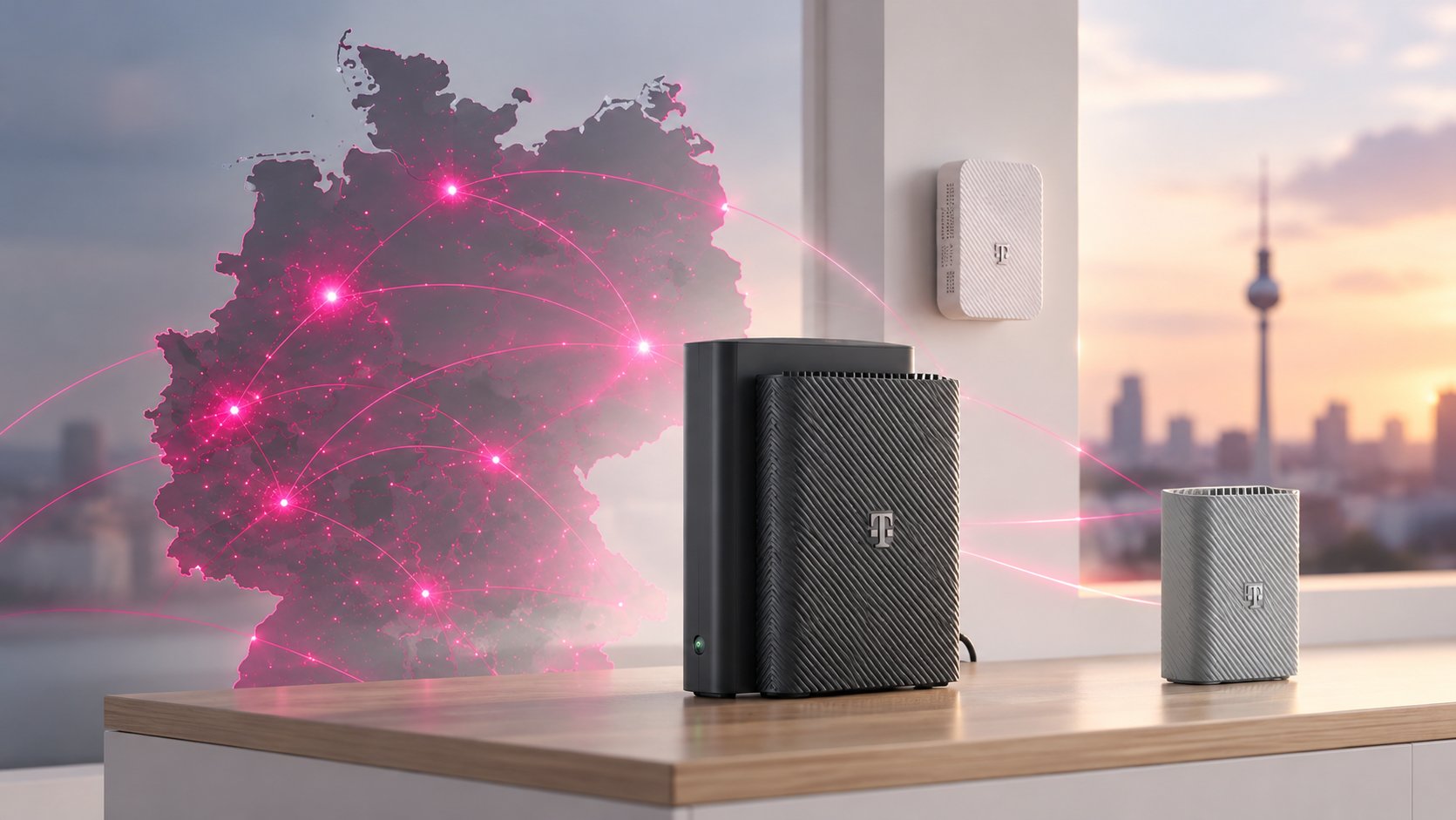
Deutsche Telekom’s Speedport 7 launch represents an important milestone in the operator’s transition towards an open, software-driven home connectivity platform. The gateway uses MediaTek silicon, while its Wi-Fi mesh extenders are based on Qualcomm chipsets. The system is orchestrated using Airties mesh software and runs within the RDK open-source ecosystem, Pedro Bandeira said.
“This was also the most fragmented ecosystem from a hardware point of view that we have launched ever,” Pedro Bandeira says. But despite the complexity, the project exceeded expectations: The Speedport 7 reached an equivalent level of product maturity faster than previous Deutsche Telekom gateway launches, while development was completed in approximately half the time originally estimated.
Watch the full interview with Deutsche Telekom SVP Pedro Bandeira here
Deutsche Telekom attributes much of this success to experience accumulated through earlier RDK deployments across Europe. The company decided to adopt RDK in late 2019 after evaluating several open-source alternatives. The decisive factor was that RDK was already proven at scale, with millions of deployed devices.
The transition nevertheless required a fundamental change in Deutsche Telekom’s operating model. Instead of purchasing complete hardware and software solutions from OEMs, the operator began sourcing hardware independently and developing its own software.
The first 12 to 18 months were challenging, Pedro Bandeira said, but the benefits soon became clear: Greater hardware sourcing flexibility, lower costs, and faster introduction of software services such as cybersecurity, Wi-Fi mesh, and quality-of-experience management. Today, Deutsche Telekom can use multiple OEMs while delivering essentially identical products and customer experiences.
“We want to have the flexibility to work with the vendor that helps us today and have the option at any time to move from A to B,” Pedro Bandeira said. Deutsche Telekom has also built its own RDK-based CPE management platform, using the WebPA approach and open-source components originally contributed by Comcast. The platform now manages millions of devices across multiple countries.
Deutsche Telekom: 6 GHz Wi-Fi is heading for the mass market
One of the most significant developments is Deutsche Telekom’s evolving position on 6 GHz Wi-Fi. The original Speedport 7 does not support 6 GHz, reflecting a product decision made when compatible client devices were relatively uncommon. Deutsche Telekom’s original strategy was to associate 6 GHz with its fastest fibre broadband offerings, particularly XGS-PON.
The operator has already launched its first 6 GHz-capable residential product in Europe, in Slovakia, combining XGS-PON access with 6 GHz Wi-Fi. But that strategy is now under review. Pedro Bandeira points to increasing congestion in the 5 GHz band, combined with the growing availability of 6 GHz-capable client devices, as reasons to reconsider the technology’s role.
“So I can tell you that for the future, we will very, very likely have a mass market approach to 6 GHz in the sense that all of our products should support 6 GHz,” Pedro Bandeira says. This represents an important potential shift from positioning 6 GHz as a premium feature towards making it a standard capability across Deutsche Telekom’s residential gateway portfolio.
Wi-Fi 8: Technology upgrades are becoming harder to justify
Despite Deutsche Telekom’s commitment to introducing new Wi-Fi generations early, Pedro Bandeira acknowledges that consumers are becoming increasingly satisfied with their existing wireless performance. Wi-Fi 6 remains a capable technology for many households, making it more difficult for operators to justify accelerating gateway replacement cycles simply to introduce newer standards.
Deutsche Telekom therefore expects to continue introducing new generations at the premium end of its portfolio before gradually expanding availability to the mass market. Longer gateway lifetimes also make commercial sense given the substantial cost of residential CPE. The implication is that Wi-Fi 8 will need to deliver compelling customer benefits beyond simply offering a newer technology generation.
AI: From network analytics to intelligent home support
Deutsche Telekom already collects extensive operational data from its gateways, RDK clients, Airties Wi-Fi management software, and cybersecurity services. Historically, the challenge was extracting actionable information from the enormous volume of data. “We were actually drowning in information,” Pedro Bandeira said.
AI is changing that. Deutsche Telekom is now using AI to analyse individual client behaviour, recognise error patterns, and identify and resolve connectivity problems significantly faster. But the operator’s ambitions extend beyond centralised analytics.
Deutsche Telekom already has set-top boxes equipped with neural processing units (NPUs), and Pedro Bandeira expects similar AI acceleration hardware to appear in home gateways soon. The objective is to distribute AI workloads across devices inside the connected home rather than treating gateways and set-top boxes as separate platforms.
One particularly interesting opportunity is combining Edge AI with conversational interfaces. Deutsche Telekom already has a conversational AI layer associated with its television services. In the future, customers could potentially use their TV or smartphone app to diagnose and resolve home Wi-Fi problems without contacting customer support.
“You can interface with your TV and actually solve your Wi-Fi problems. You’ll be able to interface with our app in your smartphone and solve your Wi-Fi problems,” Pedro Bandeira said.
For Deutsche Telekom, the combination of open-source software, vendor-independent hardware, 6 GHz Wi-Fi, and Edge AI points towards a fundamentally different approach to residential connectivity. The future may be defined less by the gateway itself and more by how intelligently the operator can manage the entire connected home.
/Claus.