By Claus Hetting, WiFi NOW CEO & Chairman
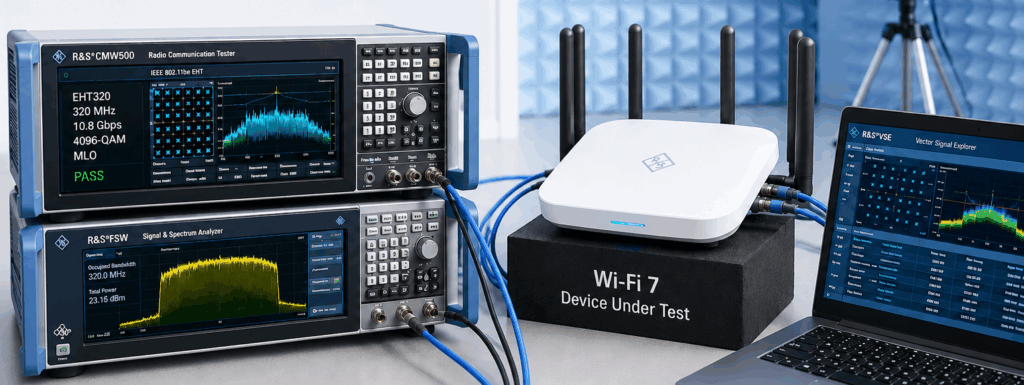
Wi-Fi 7 is deploying rapidly—particularly in enterprise networks—but the latest Wi-Fi standard has yet to penetrate the majority of Wi-Fi markets. As a result, Wi-Fi 7 will continue to drive the development of new products and innovations for many years to come. Understanding the details of the standard – and how to ensure product quality and high performance through rigorous testing – is critical to market success. For anyone involved in developing, validating, or deploying Wi-Fi 7 solutions, Rohde & Schwarz’s white paper on Wi-Fi 7 is highly recommended reading.
Wi-Fi 7 has been around since 2024 as an approved standard – and most vendors have already adopted Wi-Fi 7 as their technology of choice, particularly for high-end products. However, there is arguably still plenty of runway left when it comes to developing and deploying Wi-Fi 7-based products for the mass market. According to Dell’Oro Group (read more here), 37% of enterprise Wi-Fi APs are today Wi-Fi 7 capable, while data from Ookla reveals that only a few percent of home gateways support Wi-Fi 7.
This means that vendors and ODMs still stand to benefit a great deal from the Wi-Fi 7 standard in coming years as the mass market for Wi-Fi 7 expands. To capitalise on the opportunity, a deep understanding of the technology is essential. The current white paper by the testing experts from Rohde & Schwarz is one of the best technical guides to Wi-Fi 7 and Wi-Fi 7 feature testing that we have seen. The paper presents all the relevant IEEE 802.11be PHY features in carefully explained detail, as well as PHY-layer test requirements. It is highly recommended for any engineer working on Wi-Fi 7 product development.
Download the paper by clicking this link.

/Claus.